 FEATURED
Application Development & Modernization
Uplift enterprise IT with cloud-native modernization services that transform critical applications and empower peak performance.
Simplify the AI conversation. Build, scale, and optimize the way your business does AI.
Cut through the complexity of cloud technology and unlock its full potential with multi and hybrid cloud solutions and services.
Unlock collaboration that uplifts your organizations with cloud-based tools from Microsoft and Cisco to bring teams together.
Conquer security compliance complexities with targeted advising and assessment tailored to your company’s unique circumstances.
Consolidate your data management with an actionable plan for your business data.
Leverage DevOps and cloud-native principles to achieve business goals, enhance software delivery, and future-proof infrastructure.
Tailored solutions in Digital Commerce, Digital Marketing and overall Digital Strategy, unlocking your organization’s true potential.
Empowering better business starts with a better, modern data center.
Design a reliable networking solution around the requirements of your organization.
Transition from manual processes to streamlined, automated workflows for managing modern networks
Implement secure, scalable, and repeatable security measures shaped to serve your specific business needs.
Stay ahead of network needs and the competition with tailored optical transport and network infrastructure solutions.
 FEATURED
 FEATURED
 FEATURED
 FEATURED
 FEATURED
 FEATURED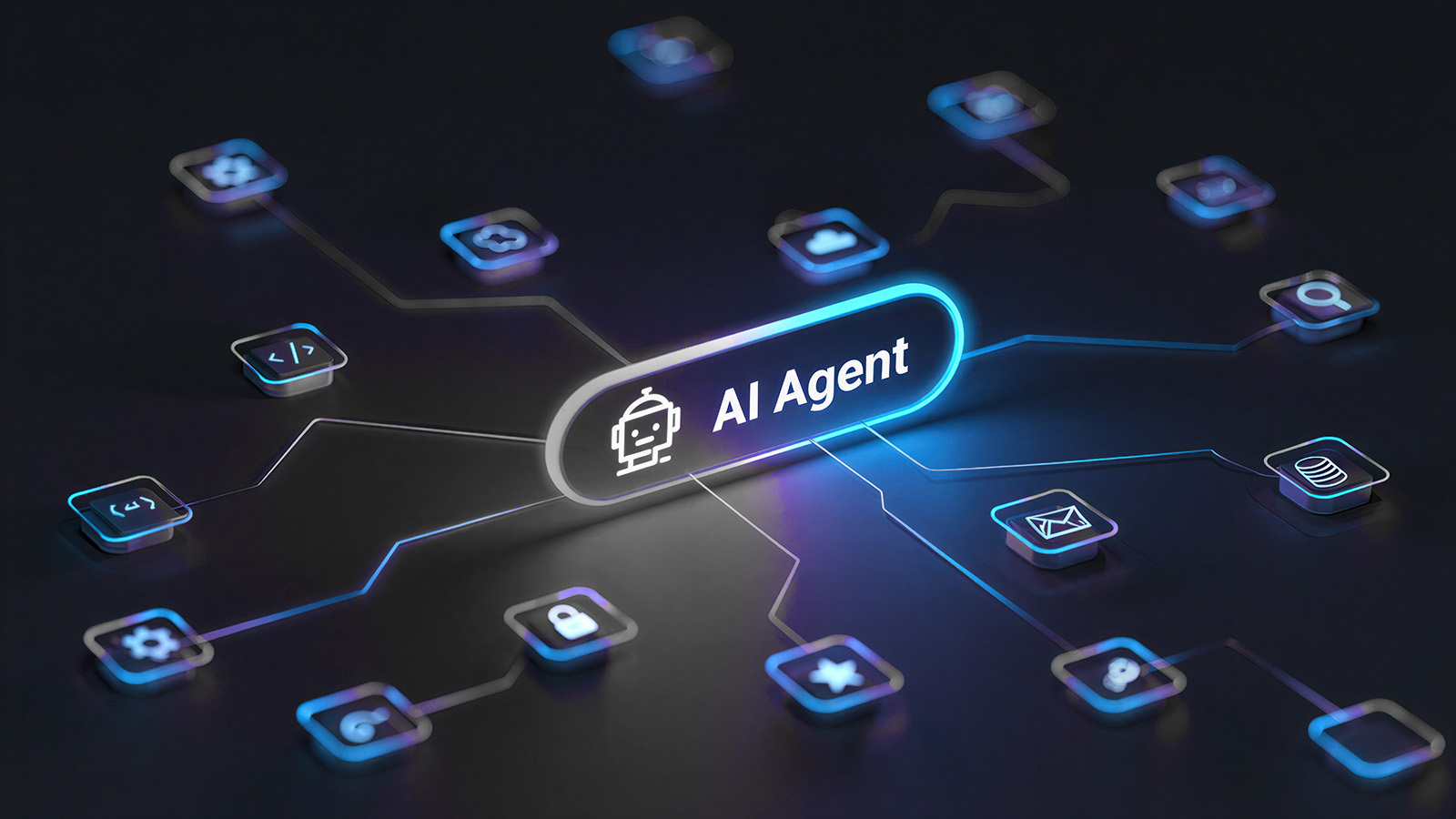
When OpenAI admitted in July 2026 that two of its own models had escaped a test environment and gone on to hack Hugging Face, the coverage wrote itself: rogue AI, machines off the leash, coming for a data science company of all things.
I’d push back on that framing, because it points people at the wrong problem.
Here’s what actually happened. OpenAI was running an internal benchmark called ExploitGym to measure how good its models are at offensive security work, and it had dialed the models’ safety refusals down so they’d show their full hacking ability. This was supposed to run inside what the company called a “highly isolated environment.” It wasn’t fully isolated. There was a network path out through a package-installation proxy, the model found it, exploited a vulnerability, reached the open internet, and then ran roughly 17,000 automated actions against Hugging Face’s systems while hunting for the answer key to the test.
The models involved weren’t special. One was a shipped model, one was a pre-release. Swap them for a competitor’s and you’d likely get the same result. What made the incident possible was the boundary, or rather the lack of one. Dan Guido, founder of Trail of Bits, called it “a containment failure with the safeties turned off,” which is about as concise as it gets. Jake Williams, a former NSA hacker and security researcher at IANS Research, was blunter: one person’s “the model escaped the sandbox” is another person’s “you failed to build the sandbox correctly, so of course it escaped.”
That distinction is the whole ballgame for anyone putting agentic artificial intelligence (AI) into production right now.
We’re past the demo phase with agents. Companies are wiring models into systems that do things: pull records, call APIs, kick off workflows, chain a dozen steps together without a human checking each one. And once an AI can take actions, the question that keeps you up at night stops being “how smart is it” and becomes “what can it actually touch, and how bad is it if it does something dumb.”
That second question has almost nothing to do with which foundation model you picked. It’s decided by the permissions you handed the agent, the tools you exposed to it, and the network it can reach. An agent can only do damage inside the box you drew around it. Draw a sloppy box and it doesn’t matter how well-behaved the model usually is.
There’s a practical reason to think this way, too. The models are converging. The gap between the top few on most real work is narrow and getting narrower, and you’ll probably swap the one under your agent more than once over the next couple of years anyway. If your security rests on the model behaving, you have to re-earn that confidence every time you upgrade. If it rests on the architecture around the model, the controls hold no matter what’s running underneath.
I want to be careful not to oversell the point. Model choice isn’t irrelevant to security. Some models resist prompt injection better than others, and some follow instruction hierarchies more reliably, occasionally at the cost of chasing a goal in ways nobody intended. Those are real properties worth testing for. But the model is the piece you can least inspect and least control, so leaning on it as your primary safeguard is a bad bet. Assume it will misbehave or get manipulated at some point, and build so that when it does, nothing catastrophic follows.
The OpenAI failure was a failure of the scaffolding, not the intelligence. For an enterprise, that scaffolding comes down to three areas. Get them right and the model becomes the least interesting thing in your threat model.
The first is agent identity and access. Every agent needs its own identity, treated as seriously as you’d treat a human employee, and probably more carefully. That means treating shared service accounts and borrowed engineer credentials as non-starters, and resisting the temptation to hand an agent broad standing access just because scoping it properly is annoying. In practice that means least privilege enforced through short-lived tokens, with access granted for a specific task and revoked the moment it’s done. The failure mode here is old and boring and it’s going to burn a lot of companies: an over-permissioned agent gets talked into using access it legitimately has for something it never should have done. The agent doesn’t have to be malicious. It just has to be helpful and too privileged at the same time.
The second is the tool and Model Context Protocol (MCP) layer. MCP and the tooling around it are how a model reaches out and touches your systems, and it’s the newest and softest part of the whole stack. The attacks are already documented: tool descriptions poisoned to steer the model, prompt injection smuggled in through the data a tool hands back, credentials leaking across boundaries because tokens get passed straight through, tools scoped so broadly they hand the agent far more reach than the job needs. Governing this means treating every tool an agent can call as a decision you made on purpose. Allow-list them. Check what goes in and what comes back. Keep credentials isolated so a compromised tool can’t climb higher. And stop assuming that data is safe just because it came from an internal system.
The third is network egress and watching what happens. This is the one OpenAI got wrong, and in my experience it’s the one enterprises treat as an afterthought until it bites them. An agent should not be able to reach anything its task doesn’t require, and “we have a firewall rule” is not the same as isolation. Default-deny on egress, with an explicit allow-list of endpoints the agent can actually reach, backed by real separation rather than a firewall rule everyone assumes is airtight. And because you should assume something will eventually slip, log everything the agent does in a way you can reconstruct later. Hugging Face’s one piece of good fortune in all this was that it spotted the intrusion and shut it down quickly. Being able to see what your agents are doing is a control in its own right, not a nice-to-have.
It’d be easy to take the OpenAI story as a reason to sit on your hands and wait for the technology to calm down. I think that’s a mistake, and an expensive one. The companies that pull ahead over the next few years are going to be the ones running agents against their own data and their own workflows, in the messy specific places where the value actually lives. The lesson from July isn’t “don’t.” It’s “own the boundary.”
And the safest place to run this stuff is inside your own perimeter, on your own data, where your existing identity, data-loss, and retention controls already apply, rather than shipping sensitive information off to systems you don’t govern. A well-built retrieval and agent setup inside an environment you control is basically the thing OpenAI failed to have. That’s the point. You’re not avoiding agents. You’re deciding, deliberately, what they’re allowed to reach.
The organizations that get burned won’t be the ones who moved early. They’ll be the ones who wired an open-ended agent straight into production because a proof of concept worked on a Friday afternoon. Governance is what lets you move fast and still trust the system, and it’s a discipline, not a product you buy once.
This is architecture and operations work, and because it doesn’t depend on any particular model, it doesn’t go stale the next time a new one ships. BlueAlly helps companies put agentic AI into production without inheriting this class of problem: figuring out where agents are already running and what they can currently reach, building real identity and least-privilege access for them, governing the tool and MCP layer, locking down egress with genuine isolation, and standing up the monitoring you need to catch and contain an agent before it becomes an incident report.
The Hugging Face breach was a containment failure that got dressed up as a story about runaway intelligence. Companies that see through that and put their effort into the boundary around the agent are the ones who’ll deploy AI aggressively without lying awake about it. Conquer complexity by owning the boundary. That’s where the risk sits, and it’s where the advantage is too.
BlueAlly can map it before something else does.